Train versus Plane: Which Mode of Transport Is Faster?
December 15, 2025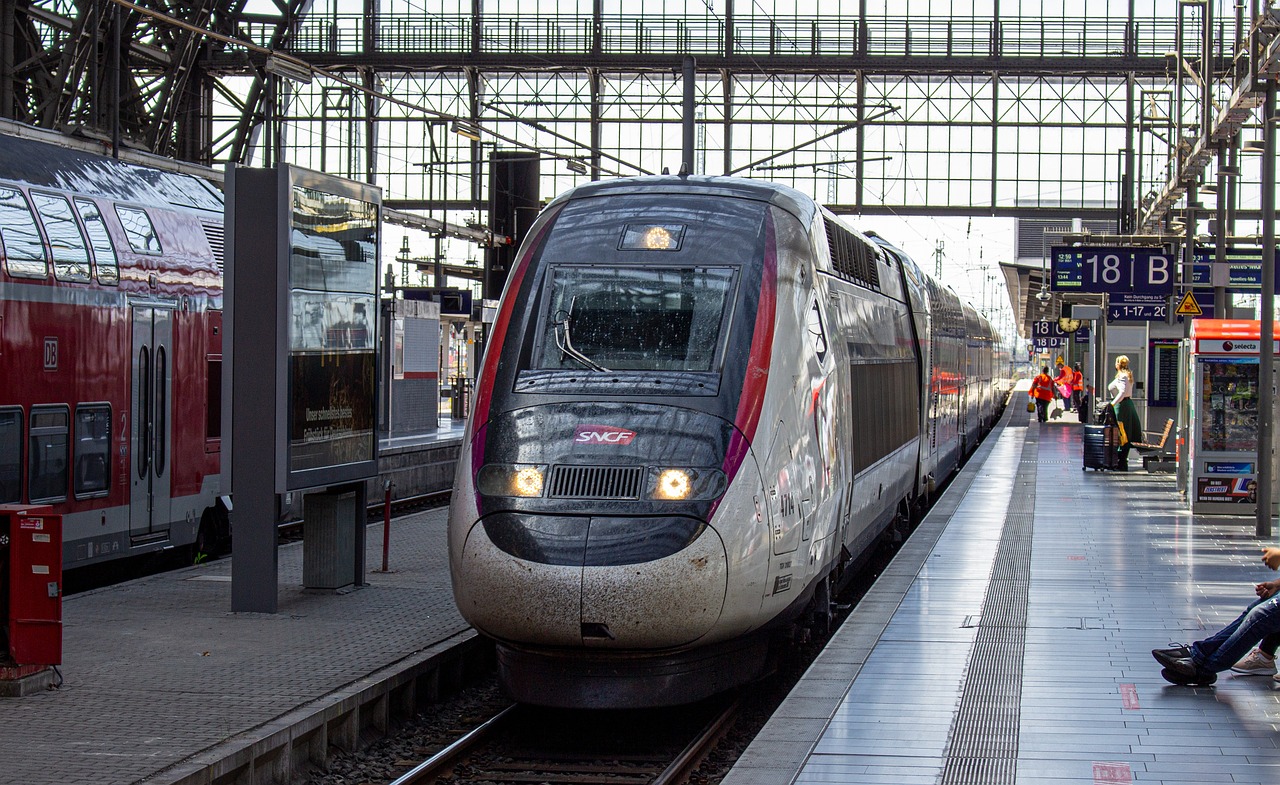
Train versus Plane: Which Mode of Transport Is Faster?
In the era of door-to-door travel, business travelers are focused on optimizing their journey time. This raises a key question: which mode of transport should be prioritized—train or plane?
Competition between rail and air transport is intense. Both sectors are continuously innovating to outperform the other. Onboard Wi-Fi, five-star service, business lounges—every advantage is leveraged to attract business travelers.
Train versus Plane: What You Need to Know
Choosing the train over the plane offers several advantages for business travelers. First, rail transport conveniently connects city centers, with significantly reduced boarding times. In addition, rail services have evolved to better meet business travel needs: subscription cards, one-click booking and changes via professional apps, expanded lounge access, dedicated business class, and more.
Onboard services are also increasingly comprehensive: priority boarding, dedicated staff, Wi-Fi, meeting rooms, taxi reservations from the train, valet parking, and many other amenities. All these improvements are designed to compete directly with air travel on the same routes.
Beyond these factors, time savings remain the most critical criterion. A business traveler seeks to minimize—or at least optimize—travel time. For example, a one-hour flight typically requires around three hours door-to-door when factoring in airport transfers, security checks, and boarding procedures. This time is largely unproductive, as the traveler often cannot work or rest efficiently. By contrast, those same three hours spent on a train can be fully used for work or relaxation.
Comparisons between air and rail options are available through online booking tools (SBTs). On a given route, business travelers can view both transport modes side by side, enabling them to choose the option that best meets their needs while remaining compliant with their corporate travel policy.
Train or Plane: Top 10 Routes Where Train Is Faster
According to a study conducted by GoEuro (an online transport booking platform), business travelers can save up to 3 hours and 30 minutes on a professional trip by choosing the train. Below is the ranking of the 10 fastest train routes:
-
London – Paris: 3h24*
-
Brussels – Paris: 2h39
-
Madrid – Valencia: 1h28
-
Paris – Lyon: 1h28
-
Bologna – Rome: 1h26
-
Marseille – Lyon: 1h26
-
London – Manchester: 1h24
-
Barcelona – Madrid: 1h24
-
Brussels – London: 1h10
-
Madrid – Alicante: 1h08
*By traveling from London to Paris, a business traveler saves more than three hours by choosing the train over the plane.
Based on GoEuro’s findings, business travelers can confidently consider European rail journeys as an alternative to air travel, particularly with high-speed trains—especially in Italy—reaching speeds of up to 360 km/h. Beyond time savings, rail travel also significantly reduces carbon emissions. It is worth considering.